The Playstreet Dyspraxia Program
But in some children, the deeper difficulty lies in planning and coordinating movements, including the very precise movements required for speech.
Let's understand that speech production is motor and needs motor planning.
At Playstreet, we created the Dyspraxia Program to support children who struggle with motor planning through a whole-body developmental approach.
Because speech, movement, and coordination are deeply connected.
Sometimes the Challenge is not Language — it’s Motor Planning.
Many parents come to us concerned about their child’s speech clarity or delayed speech. Sometimes the real challenge lies in how the brain plans and coordinates movement


Speech is a Whole-Body Process
What Is Dyspraxia?
Dyspraxia is a term used to describe difficulties with planning, organising, and carrying out coordinated movements.
These challenges can affect many areas of everyday life, including:
Motor planning
Movement and coordination
Balance and posture
Fine motor skills
Speech production
Sequencing actions
Children with dyspraxia may know what they want to do, but their brain may struggle to organise the movements required to do it smoothly.
This can affect activities ranging from running and climbing to speaking and expressing words clearly.

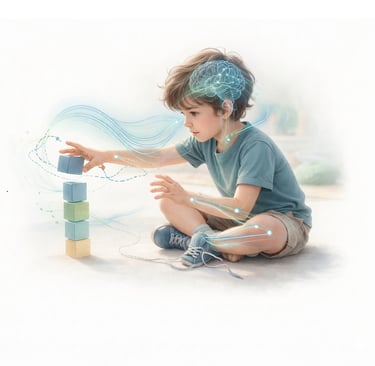
How Dyspraxia Can Affect Children?
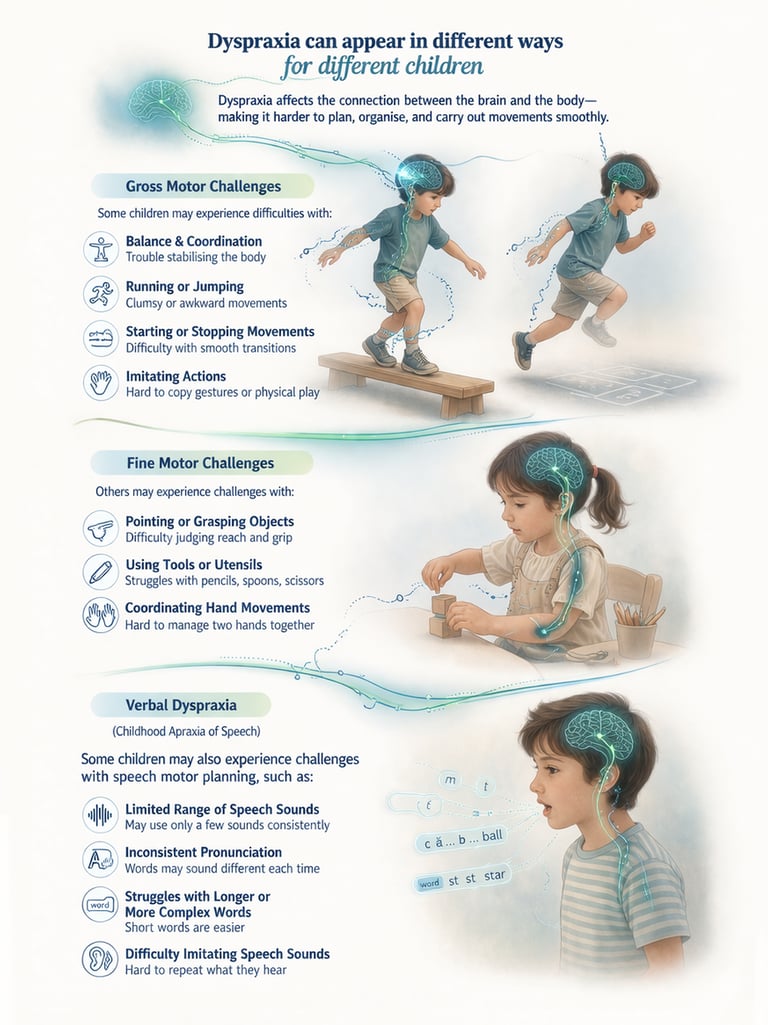
Dyspraxia can appear in different ways for different children.
Some children may experience challenges with gross motor movements, such as:
Balance and coordination
Running or jumping
Starting or stopping movements
Imitating actions
Others may experience fine motor challenges, such as:
Pointing or grasping objects
Using tools or utensils
Coordinating hand movements
Some children may also experience verbal dyspraxia (childhood apraxia of speech(CAS)), where coordinating the precise movements required for speech becomes difficult.
Children with verbal dyspraxia may:
Use a limited range of speech sounds
Show inconsistent pronunciation
Struggle with longer or more complex words
Have difficulty imitating speech sounds
Why Movement Matters for Speech and Learning
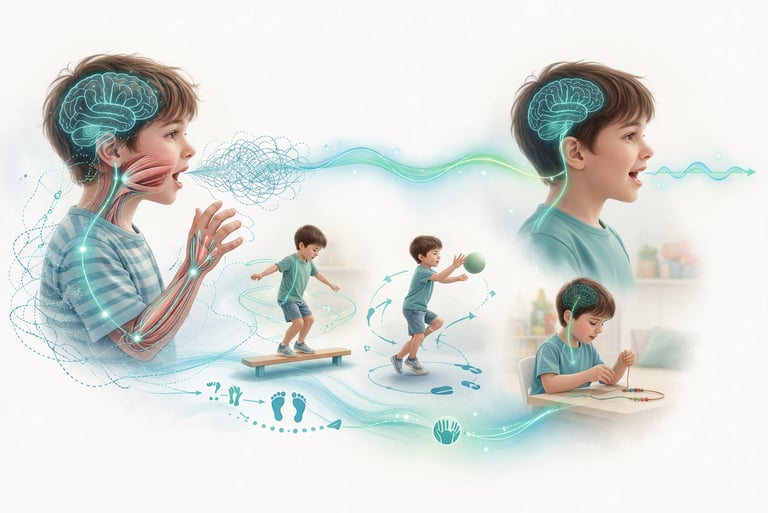
Speech is one of the most refined motor skills the human body performs.
It requires precise coordination of many small muscles working together in timed and sequenced patterns.
When the brain’s motor planning systems are still developing, focusing only on speech may not always address the underlying difficulty.
Movement-based approaches that support motor planning, timing, coordination, and sequencing help strengthen the brain systems involved in both movement and speech.
Why Playstreet Created the Dyspraxia Program...
Over time, many parents approached us seeking oral placement therapy for their children’s speech difficulties.
While this can be helpful, we often observed that many children were experiencing broader motor planning challenges, not only speech difficulties.
When motor planning challenges affect the whole body, working only on speech may not be enough.
This insight led us to design the Playstreet Dyspraxia Program, which focuses on developing whole-body motor planning and coordination.
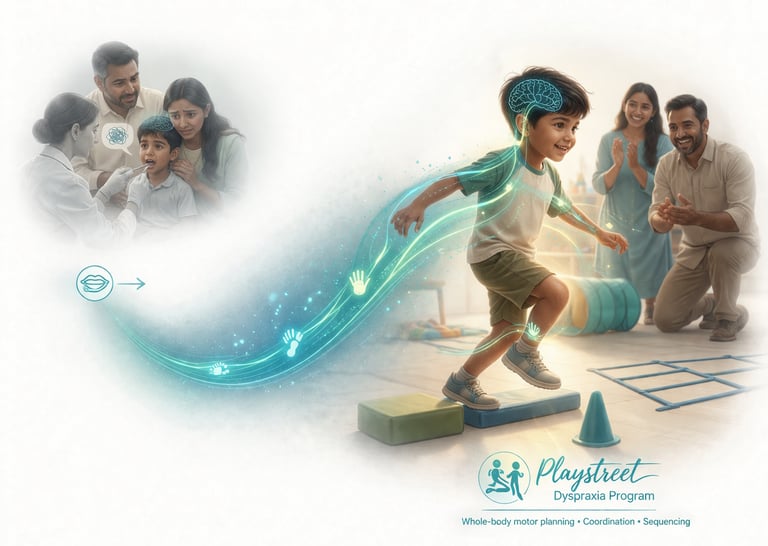
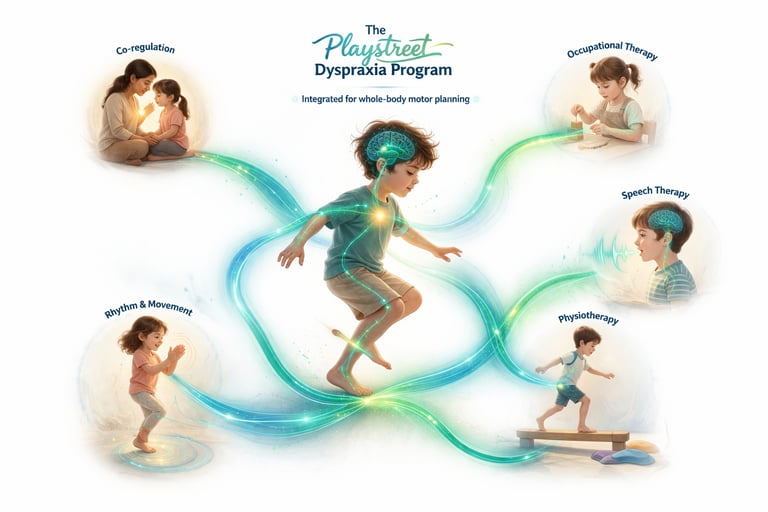
The Playstreet Dyspraxia Program supports motor development through a combination of therapies that work together to strengthen the brain–body connection.
The program may include:
Co-regulation to support regulation and nervous safety systen safety participation
Occupational Therapy goals to support motor planning and sensory-motor development
Speech Therapy goals to support speech production and communication
Physiotherapy goals to improve posture, strength, and coordination
Rhythm and Movement Program calles UPBEAT that support timing, sequencing, and body awareness
Together, these experiences help children develop more organised and coordinated movement patterns.
Our Whole-Body Approach
Why Co-Regulation Matters First
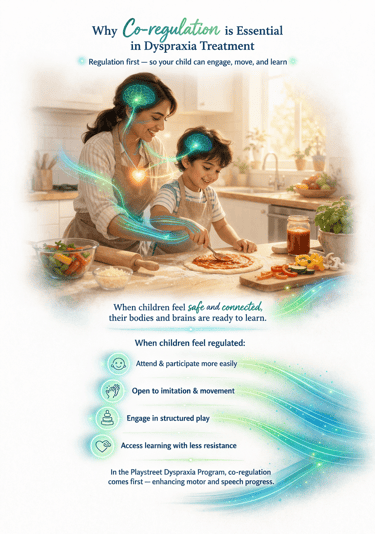
Before children can participate in motor planning activities, speech practice, or structured play, their nervous system needs to feel safe and regulated.
When children feel overwhelmed, anxious, or dysregulated, their brain naturally focuses on survival rather than learning.
Through co-regulation, caregivers help children experience safety, connection, and emotional balance.
When children feel regulated:
• They can attend and participate more easily
• They are more open to imitation and movement
• They can engage in structured play activities
• Learning becomes more accessible
For many children in the Dyspraxia Program, supporting regulation first helps them benefit more fully from motor and speech interventions.
When a child feels safe, everything changes.
In the Playstreet Dyspraxia Program, co-regulation is woven into movement and everyday interactions—reducing resistance and helping children engage more willingly. From this place of connection, motor planning, coordination, and communication can develop more naturally and with greater ease.

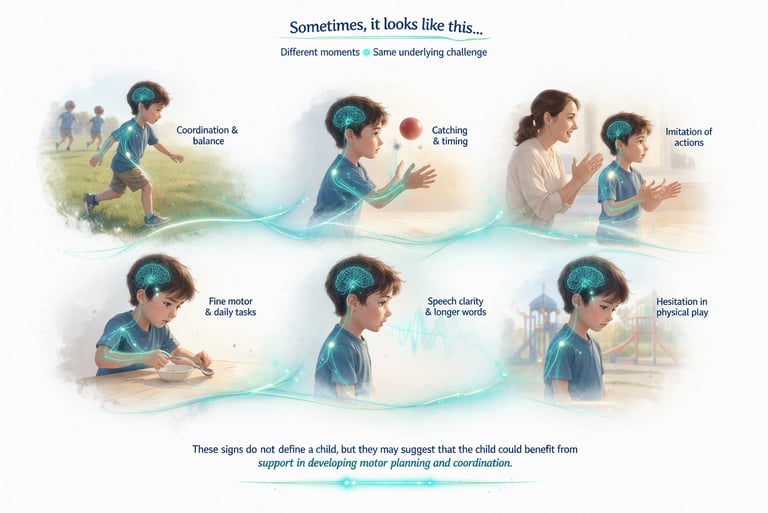
Some children may benefit from additional support if they experience:
Difficulty coordinating movements
Clumsiness or frequent falls
Challenges with imitation of actions or gestures
Difficulty learning new motor skills
Unclear or inconsistent speech
Difficulty producing longer words
Challenges with sequencing movements
Frustration when trying to complete physical tasks
Difficulty participating confidently in play activities
These signs do not define a child, but they may suggest that the child could benefit from support in developing motor planning and coordination.
Signs Your Child May Benefit From the Dyspraxia Program
Why Early Support Matters
Early identification and support can help children:
Develop stronger motor planning skills
Improve coordination and confidence
Participate more comfortably in everyday activities
Build communication and learning foundations
Movement-based interventions support the development of brain pathways involved in:
Attention
Memory
Language
Emotional regulation
Self-awareness
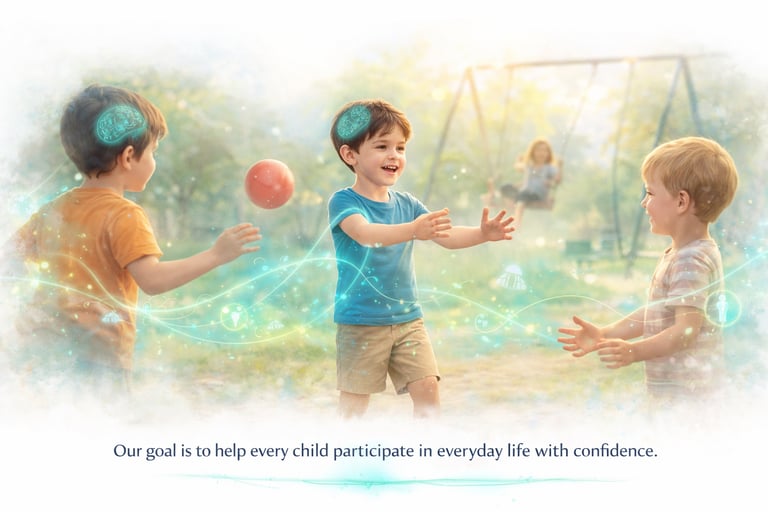
When children feel more confident in their bodies, they often become more confident in learning and interacting with others.
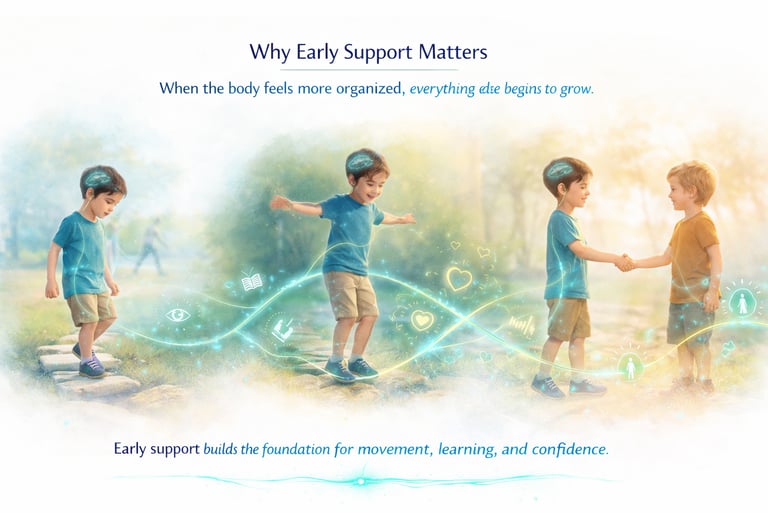
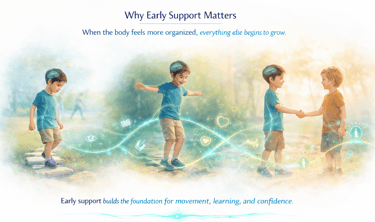
Our goal is not only to improve movement skills, but to help children develop confidence in their ability to participate in everyday life.
When motor planning becomes easier, children often experience:
Improved communication
Greater independence
Better participation in play and learning
Stronger self-confidence
Supporting Confidence Through Movement
The Playstreet Dyspraxia Program includes a structured weekly schedule designed to support motor planning across different areas.
Children typically attend multiple sessions each week, which may include:
• Occupational Therapy & Sensory Integration
• Speech Therapy & Oral sensory Motor Stimulation
• Physiotherapy
• A rhythm and movement-based group program called "Upbeat".
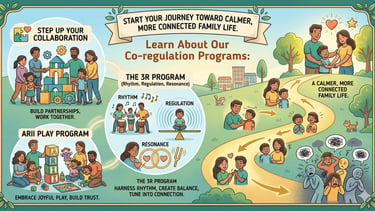
For children who require additional support in regulation, parents may also be guided through co-regulation strategies so children can support their child’s participation at home.
Ready to Understand Your Child Differently?
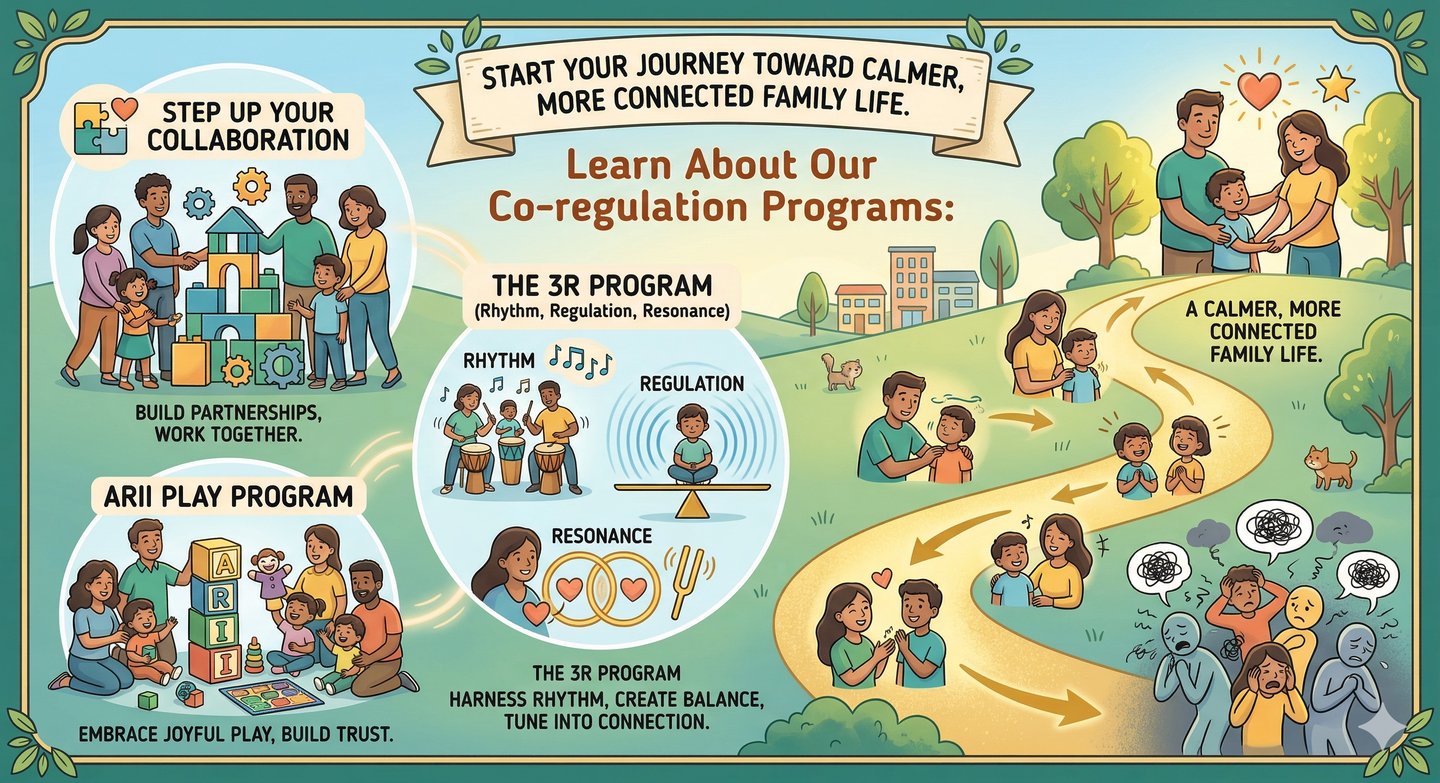
Let’s take the first step together.
Because when children feel safe, development unfolds.
PlayStreet Global – Online Guidance & Parent Empowerment Platform
Reach out to us
Subscribe to our newsletter
© 2026. All rights reserved.
Mon-Fri 09:00 am to 6:00 pm
Bangalore, India | Empowering families worldwide through online consultations and programs.