Play Therapy and Social Skills Program
At PlayStreet, It All Begins with Play
But not just any play.
It’s play that says — I see you.
It’s play that listens, waits, and invites.
It’s play that builds trust, connection, and confidence.
Welcome to ARII — PlayStreet’s unique play therapy and social skills approach grounded in neuroscience, developmental psychology, and real-world experience.
🧠 What Is ARII?
ARII stands for:
Anticipation – The pause before the play. A look, a breath, a moment that says, “I’m here with you.” This is the phase when the child starts to pay attention to you.
Reciprocity – A turn, a response. A back-and-forth dance that teaches children the rhythm of relationships.
Imitation – Not just copying, but joining. A powerful way children show, “I want to connect.”
Ideation – The creative spark. “What if we do it this way?” A child’s voice, their idea, their world.
ARII is not just a method—it’s a mindset. A way of being with your child that fosters connection before communication, relationship before regulation, and safety before skills.
🧩 Why Play Therapy?
Children learn best through play—because play is their language.
When guided with empathy and intention, play becomes the foundation for:
Emotional regulation
Social interaction
Communication skills
Problem-solving
Imagination and flexible thinking
At PlayStreet, we embed these skills into everyday moments—using the ARII model to co-regulate first, then guide learning from the inside out.
🌈 The Stages of Play: Takata’s Play Model
Understanding how play evolves helps us meet your child exactly where they are.
Unoccupied Play – Early sensory-based exploration with no specific goal
Solitary Play – Independent play that builds focus and creativity
Onlooker Play – Watching others to understand social norms
Parallel Play – Playing side by side, developing awareness of others
Associative Play – Interacting and sharing without structured rules
Cooperative Play – Working toward shared goals, rules, and ideas
Our therapists assess which stage your child is in and support their journey through richer social interaction and communication.
🔍 The Types of Play We Nurture
We intentionally design sessions around these core types of play:
🎨 Sensory Play – Exploring textures, sounds, smells, and tastes for regulation and sensory integration
🧠 Symbolic Play – Pretend and imaginative play that fuels creativity and communication
🧱 Constructive Play – Building and making things together, supporting logic, planning, and teamwork
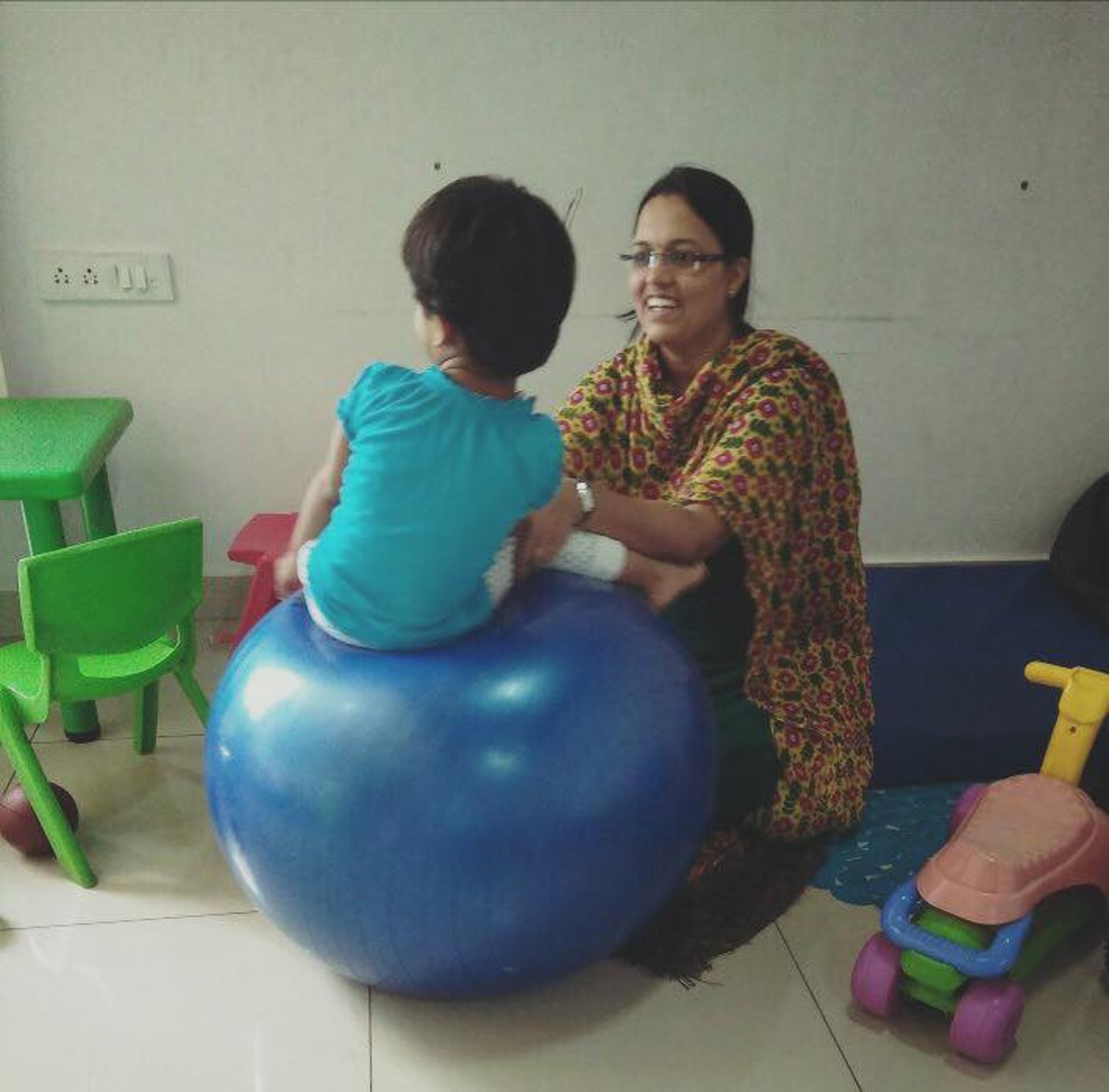
🤸 Rough & Tumble Play – Safe, joyful physical play that builds trust, boundaries, and bonding
Each type of play supports a different developmental need—emotion, cognition, motor planning, or social interaction.
🔬 The Science Behind ARII
Our approach is rooted in multiple research-backed frameworks:
RDI™ (Relationship Development Intervention) – Builds dynamic intelligence through guided interaction
Vygotsky’s Theory of Social Learning – Emphasizes the role of relationships in development
Mirror Neuron Theory – Supports learning through imitation and empathy
Polyvagal Theory – Explains how regulation and safety lead to connection and growth
Through ARII, children begin to co-regulate, then co-create.
🧸 ARII-Inspired Toy Design
Our play spaces are thoughtfully curated with toys and tools that don’t talk at children—they invite interaction.
Good toys wait. They listen. They ask: “What do you want to do with me?”
We’ve even mentored students at IIT Madras and design schools to build toys that nurture anticipation, imitation, and creativity—where science meets soul.
🎯 Sample ARII Activities in Action
Movement – Mirror games, chase-and-freeze, and balance-based co-play
Problem-Solving – Open-ended challenges that spark joint attention and ideation
Exploration – Sensory bins, water play, pretend kitchens that encourage curiosity and conversation
Every activity becomes a bridge from self to other. From chaos to co-regulation. From silence to shared meaning.
👫 Social Skills That Go Beyond Scripts
We don’t teach children what to say. We teach them how to feel safe enough to say it.
That’s why ARII isn’t just a therapy program. It’s how your child learns:
Joint attention
Emotional reciprocity
Play negotiation and turn-taking
Perspective-taking and flexibility
Making, keeping, and understanding friendships
We don’t push children to fit our world—we enter theirs. Through play, through joy, through connection.
💬 Ready to See Your Child Thrive Through Play?
Whether your child is nonverbal or highly verbal, shy or sensory-seeking, struggling with friendships or fine motor skills—ARII meets them where they are and moves them forward through joy.
💛 Final Thought
“ARII is not a technique.
It’s a way of saying — I’m here. I’m with you. Let’s play.”
— Mini Dwivedi Gopinathan, Founder, PlayStreet
It All Begins with Play
Looking for Occupational Therapy for Your Child
PlayStreet Global – Online Guidance & Parent Empowerment Platform
Reach out to us
Subscribe to our newsletter
© 2026. All rights reserved.
Mon-Fri 09:00 am to 6:00 pm
Bangalore, India | Empowering families worldwide through online consultations and programs.